Why a new federal review gives Wyoming another opportunity to stand up for the Miracle Mile, bighorn sheep, and local communities
The proposed Seminoe Pumped Storage Project is not just another energy project.
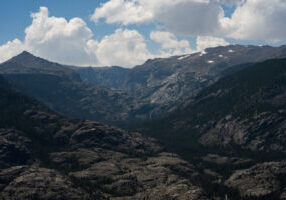
It is a massive industrial energy-storage proposal in one of the worst places in Wyoming to build it: the Seminoe, Kortes, and Miracle Mile landscape on the North Platte River.
The Wyoming Wildlife Federation supports responsible energy development. Wyoming powers this country, and our state has a long history of energy production, hard work, and practical problem solving.
But responsible energy development has to pass a basic test. It should be sited well. It should protect fish and wildlife. It should respect local communities. And it should deliver real benefits to Wyoming.
The Seminoe Pumped Storage Project fails that test.
Put simply, it is a bad project, in a bad place, and a bad deal for Wyoming.
A significant new development
There is now an important new chapter in the Seminoe Pumped Storage Project.
The Bureau of Land Management has determined that additional environmental analysis is needed before it can decide whether to grant the project a right-of-way. BLM and the Federal Energy Regulatory Commission will conduct additional review while BLM considers changes to the Rawlins Resource Management Plan.
That additional review will specifically examine crucial big game habitat, the Miracle Mile and aquatic resources, hunting, fishing, tourism, recreation, local economic impacts, and alternatives.
The timeline has also changed substantially. Instead of the near-term federal license decision many expected, the process now extends well into 2027.
This is not a victory. The project remains very much alive.
But it gives Wyoming something important: more time, another decision point, and another opportunity for state agencies, counties, conservation districts, elected leaders, hunters, anglers, local residents, and communities to make sure Wyoming’s concerns receive the attention they deserve.
What is the project?
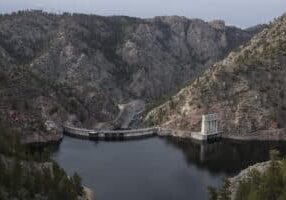
The project would use Seminoe Reservoir as the lower reservoir for a new pumped storage facility. Water would be pumped uphill into a newly constructed upper reservoir, then released back downhill to generate electricity when the power market demands it.
That may sound simple. It is not.
The final EIS says the project would include a new upper reservoir, a large dam, tunnels, an underground powerhouse, new and upgraded roads, transmission infrastructure, other facilities, and become the dominant feature on the Seminoe skyline. It would take about five years to build, permanently disturb hundreds of acres, and require thousands of acre-feet of water for the initial fill and additional water every year to replace evaporation and seepage losses. It would also be built in a landscape that matters deeply to Wyoming.

What is at risk?
The project threatens some of Wyoming’s most important fish, wildlife, recreation, and community values.
The Miracle Mile: One of Wyoming’s premier trout fisheries and a place known across the country by anglers.
The Ferris-Seminoe bighorn sheep herd: A uniquely important herd that Wyoming Game and Fish has identified as especially important because of its clean health status and value to sheep conservation in the state.
Seminoe State Park and the North Platte recreation economy: A place where Wyoming families, anglers, hunters, boaters, campers, guides, outfitters, and local businesses all have a stake.
Wyoming communities: Especially those tied to the North Platte, local recreation, tourism, water, and public lands.
This is not a small project with small impacts. It is a large industrial project proposed for a landscape that already works for fish, wildlife, and people.


Wyoming’s best bighorn sheep herd is on the line
The Ferris-Seminoe bighorn sheep herd is one of Wyoming’s greatest wildlife success stories. It grew from just 15 animals in 2003 to an estimated 300–350 today. More importantly, it is recognized as Wyoming’s healthiest bighorn sheep herd and the only viable source population for future bighorn sheep reintroductions and herd augmentations statewide.
That means this is not just a local wildlife issue. It is a statewide bighorn sheep issue.
The final EIS confirms that major project facilities would fall within crucial winter range and parturition habitat. The project would also require years of construction disturbance in the heart of this habitat. If this herd is compromised, Wyoming cannot simply replace it somewhere else.
An energy loser
One of the clearest facts in the final EIS is also one of the most important.
Pumped storage projects are net energy consumers. They use more energy pumping water uphill than they generate when water is released back down.
That does not mean pumped storage has no role anywhere. Energy storage can be useful when it is put in the right place and designed responsibly.
But that is not what is happening here.
Wyoming would carry the impacts to fish, wildlife, water, public lands, recreation, and local communities while the project serves broader electricity markets. The project is being sold as energy infrastructure, but the real tradeoff is Wyoming damage for out-of-state and regional grid benefits.
That is a bad deal.
A project built on federal subsidies and weakened wildlife protections
This project appears to need two things to be financially feasible: federal tax subsidies from the Inflation Reduction Act and a 5-to-7-year waiver of seasonal wildlife protections in the BLM’s Rawlins Resource Management Plan.
Those protections cover bighorn sheep winter range and lambing habitat, raptor nesting buffers, sage-grouse habitat, and other sensitive wildlife values. They were designed to prevent exactly this kind of conflict.
Even worse, the federal record does not include enforceable biological thresholds or real stop-work authority if monitoring shows bighorn sheep are being harmed. That is not a wildlife protection plan. That is a hope-and-see approach.
That should concern every Wyomingite.
The wildlife protections at issue are not red tape. They are guardrails. They exist to protect crucial winter range, lambing areas, sage-grouse habitat, and the fish and wildlife values that make this landscape special.
If a project only works by weakening those protections, then the problem is the project, not the protections.
And if a project also needs federal tax subsidies to make the numbers work, Wyoming should ask a basic question: why should our state carry the damage while the benefits flow elsewhere?
A federal process with Wyoming consequences
This remains a federal process, but Wyoming will live with the consequences.
For months, Wyoming agencies, counties, conservation districts, legislators, local residents, hunters, anglers, and conservation partners have raised serious concerns about the Seminoe Pumped Storage Project.
The new BLM review creates another opportunity for those concerns to receive the scrutiny they deserve.
But that will only matter if Wyoming has a meaningful voice in the process.
Wyoming Game and Fish and other state agencies bring expertise that cannot be replaced by a federal analysis from Washington. Counties and conservation districts understand this landscape and the communities tied to it. Hunters, anglers, guides, business owners, ranchers, and residents understand what is at stake on the ground.
Senators Barrasso and Lummis, Representative Hageman, and Governor Gordon have an important opportunity to make sure those voices are heard.
This is not about opposing energy. It is about making sure Wyoming has a real say in what happens here.
The Miracle Mile deserves better than “wait and see”
The Miracle Mile is too important for a gamble.
The final EIS continues to rely on adaptive management, monitoring, and operational adjustments to address water quality and fishery concerns. But Wyoming anglers know what is at stake. So do our partners at Trout Unlimited, who have done the heavy technical lift on the trout and water-quality side of this issue.
A blue-ribbon fishery should not be treated like a test case.
Once water quality, temperature, turbidity, fish habitat, or angling quality are degraded, Wyoming cannot simply get them back with a report, a meeting, or another plan.
Monitoring damage is not the same as preventing it.
Bighorn sheep could be the deciding issue
The Ferris-Seminoe bighorn sheep herd is one of the strongest reasons this project should not move forward.
Wyoming Wild Sheep Foundation and Wyoming Game and Fish have helped make clear that this herd is not just another wildlife population. It has special value for Wyoming’s broader bighorn sheep conservation work.
The final EIS still leans on plans, waivers, and mitigation to address impacts. That is not good enough.
FERC’s review effectively treats Wyoming’s wildlife protections as a cost problem for the developer. But the Ferris-Seminoe herd is not a line item. It is the foundation of Wyoming’s future bighorn sheep restoration work.
Some places are too important to gamble with. Some wildlife impacts cannot be meaningfully mitigated. This is one of those places.
What we are asking
The new BLM process gives Wyoming another opportunity to get this right.
The Wyoming Wildlife Federation is asking Senators John Barrasso and Cynthia Lummis, Representative Harriet Hageman, and Governor Mark Gordon to remain closely engaged as the new review moves forward.
We are asking them to make sure:
- Wyoming Game and Fish and other relevant state agencies have a meaningful role.
- Existing protections for crucial big game habitat and seasonal wildlife needs are taken seriously.
- The Miracle Mile, Ferris-Seminoe bighorn sheep herd, recreation economy, hunting, fishing, tourism, and local communities receive a full and honest analysis.
- Reasonable alternatives that avoid or reduce conflicts with Wyoming wildlife and existing land-use protections receive serious consideration.
- Any mitigation agencies intend to rely upon is actually developed and available for meaningful review.
- Counties, conservation districts, local residents, hunters, anglers, and other Wyoming voices are heard.
We appreciate Senator Barrasso’s continued engagement and his willingness to raise Wyoming’s wildlife concerns directly with federal regulators. We hope Wyoming’s full delegation and Governor will remain equally engaged as this new process moves forward.
The basic question has not changed.
Should Wyoming accept the risks to the Miracle Mile, our most important bighorn sheep herd, public lands, recreation, and local communities for a project whose benefits largely flow into broader electricity markets?
We continue to believe the answer is no.
Make sure Wyoming is heard