A Remarkable Recovery
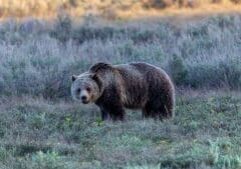
Grizzly bear sightings have become common across the West. However, in the not-too-distant past, spotting one of these critters would be considered about as unique as running into a wolverine. The expansion of this iconic species is due to the hard work of many generations of conservationists, landowners, hunters, and wildlife professionals. The story of grizzly bears in Wyoming proves that, given time, conservation works, and all stakeholders in Wyoming can
achieve significant goals.
When grizzlies were listed under the Endangered Species Act in 1975, it was estimated that the Greater Yellowstone population had a measly 136 bears. Today, due to the grit and foresight of many folks, the Greater Yellowstone Ecosystem is estimated to have over 1000 bears. The recovery of grizzlies gives us all hope, especially as we look ahead.
Can we replicate this story for other species across Wyoming and the West?
With collaboration between state agencies and local communities, can we address issues such as habitat fragmentation, drought, disease, public access, migration barriers, and an aging infrastructure?
The Wyoming Wildlife Federation sees the story of the grizzly not just as a lone feat, but as evidence that conservation goals are not just theoretical – they are possible.
Grizzlies & the 4(d) Rule
As bears recover and occupy more country, interactions with livestock, hunters, landowners, communities, and people recreating outside increase. The challenge is maintaining both a healthy bear population and people’s willingness and ability to live alongside bears.
This is the point in a recovery story where protection alone is no longer enough, and active management should take the lead.
In a novel approach, the U.S. Fish & Wildlife Service has proposed a rule change to address the growing grizzly bear population throughout the West. This follows recommendations and
thoughtful insight from the many great people involved in the conservation space.
The Wyoming Wildlife Federation is proud to have worked alongside organizations such as the Boone and Crockett Club, Rocky Mountain Elk Foundation, and the Environmental Research Center to help
develop the basic framework for the 4(d) rule change.
The new rule keeps the bears listed under the Endangered Species Act, but gives states and tribes more day-to-day authority to manage populations that have already met recovery targets.
Greater flexibility kicks in once a state has solid management plans, conservation strategies, and a formal agreement with the Service. Federal oversight stays, but the people who live with the
bears get more say.
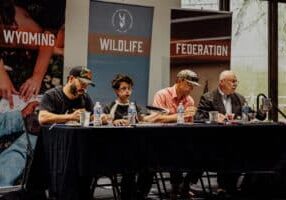
WWF Government Affairs Director Jessi Johnson clarifies the 4(d) rule: “This isn’t a delisting proposal, this isn’t a piece of legislation, this is not a congressional bill – this is a rule that can be revisited, that can be finessed, that can be changed.”
The proposal doesn’t open hunting seasons or strip away the biological sideboards that keep populations healthy. It recognizes that Wyoming’s wildlife professionals have already proven they can steward these animals successfully. We are here today because WGFD worked tirelessly with the FWS to make sure this happened and continues to happen. The large carnivore crew, currently led by Dr. Dan Thompson is the best of the best and we are confident in their continued management.
Future Generations
Ultimately, the WWF sees this rule change as a step in the right direction. It’s far from a fix-all solution, but a tool to ensure that bears and people can live together. We want healthy grizzly populations to remain part of this landscape. We also want professional wildlife managers to have practical tools to prevent and resolve conflicts, strong biological safeguards to remain in place, and hunters, ranchers, landowners, and communities to retain confidence in how bears are managed.
WWF board member David Willms has worked for nearly a decade to advance the core idea behind this approach. As an avid outdoorsman and conservationist, Willms said, “If you want to build social tolerance of bears and trust in the state’s ability to manage grizzly bears, then you should let them manage grizzly bears under the 4(d) rule, and the Service obviously still has ultimate oversight.”
Through productive, proactive, science-based management, we can continue the grizzly bear success story far into the future. Generations yet to be born, both grizzly and human, will have a
place within the borders of the Cowboy State.
This kind of conservation doesn’t happen through one comment letter or one meeting. It takes years of expertise, relationships, persistence, and collaboration. Supporting WWF helps make that work possible.
Since 1937, we’ve worked from the field to the Capitol for Wyoming’s wildlife, building relationships, advancing practical solutions, and helping turn conservation success into something that lasts.
Thank you for your continued support as we continue to advocate for our great and wild state.